
Problem
Inadequate Support Limits Therapy Effectiveness
Having experienced the challenges of at-home and in-person physical therapy, it becomes clear how difficult it can be for patients to stay motivated and perform exercises correctly without personalized care and guidance. This understanding led to exploring how recovering patients deserve real-time feedback and accessible support.
Key Features
Personalized Experience
The application includes a handful of important elements, such as: personalized experience, pain recognition, progress tracking, health insights and real-time feedback.
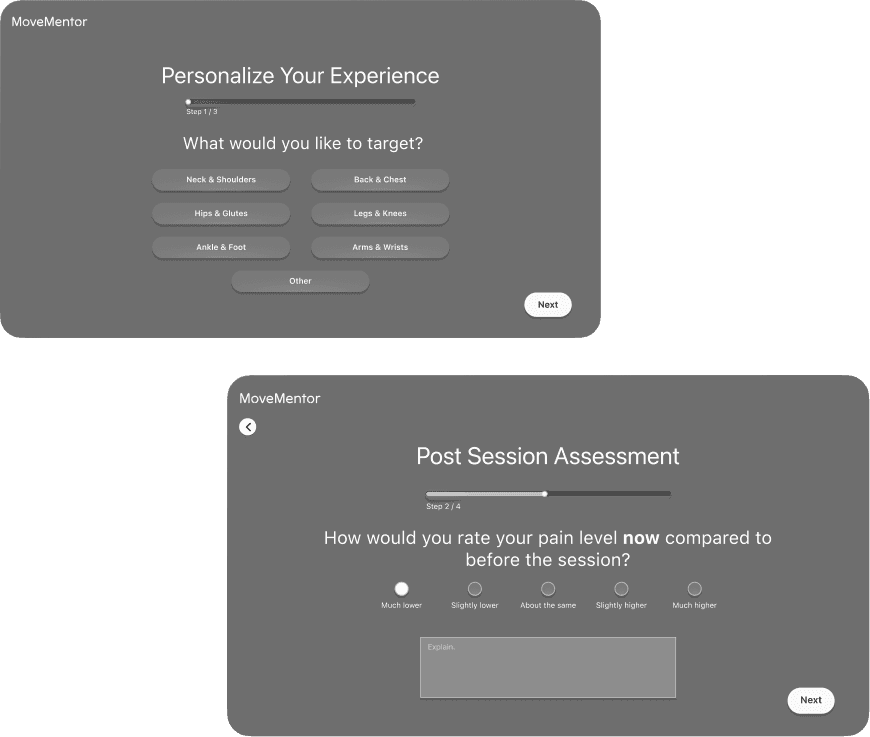
A personalized recovery process with pre and post-workout surveys. Before each session, users assess their pain, abilities, and goals, while post-workout surveys help track progress and challenges.
Pain Recognition
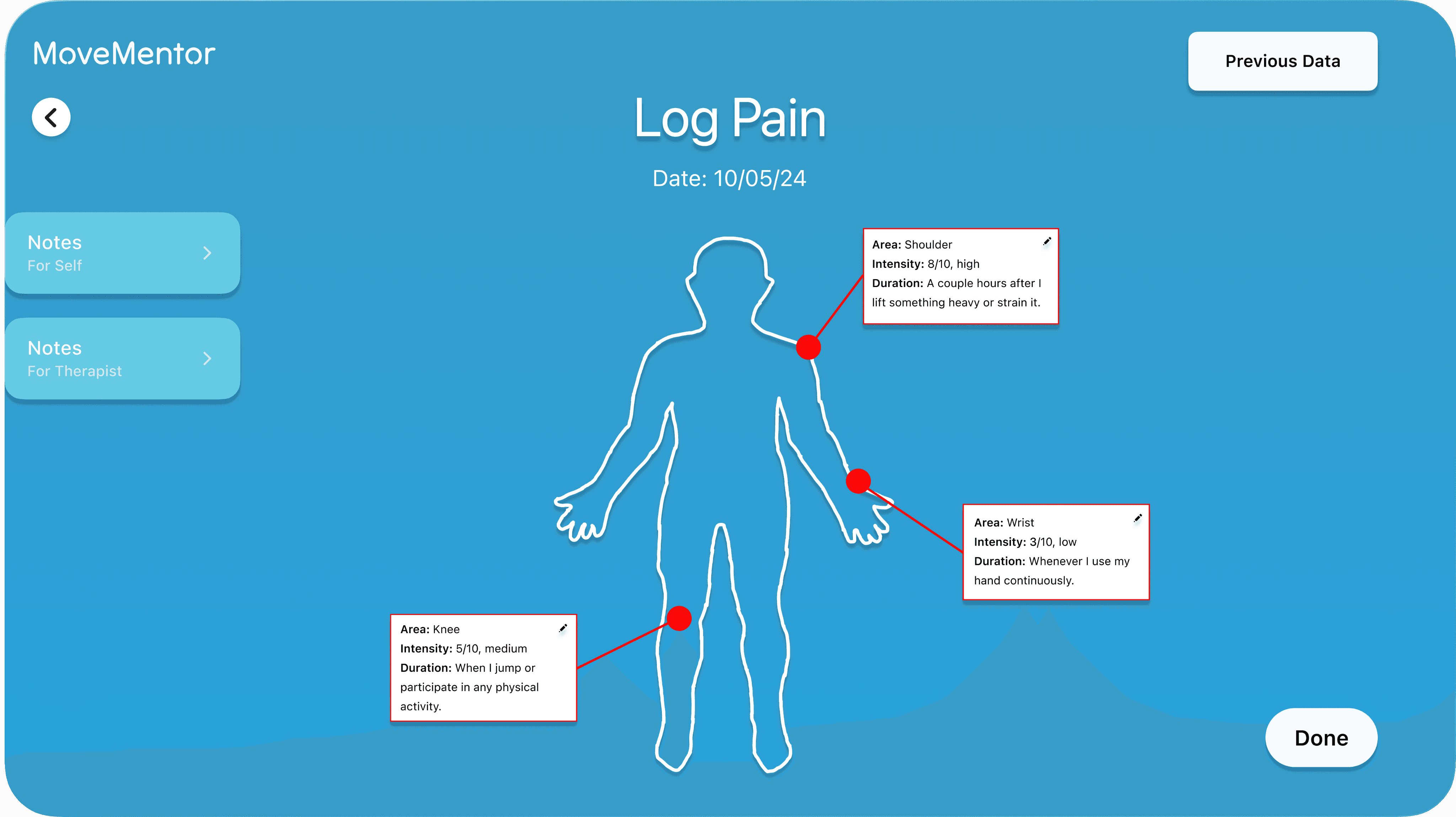
The Pain Log allows users to record pain levels before and after each workout. This feature tracks the intensity, location, and frequency of discomfort, helping users identify pain patterns throughout their recovery.
Progress Tracking
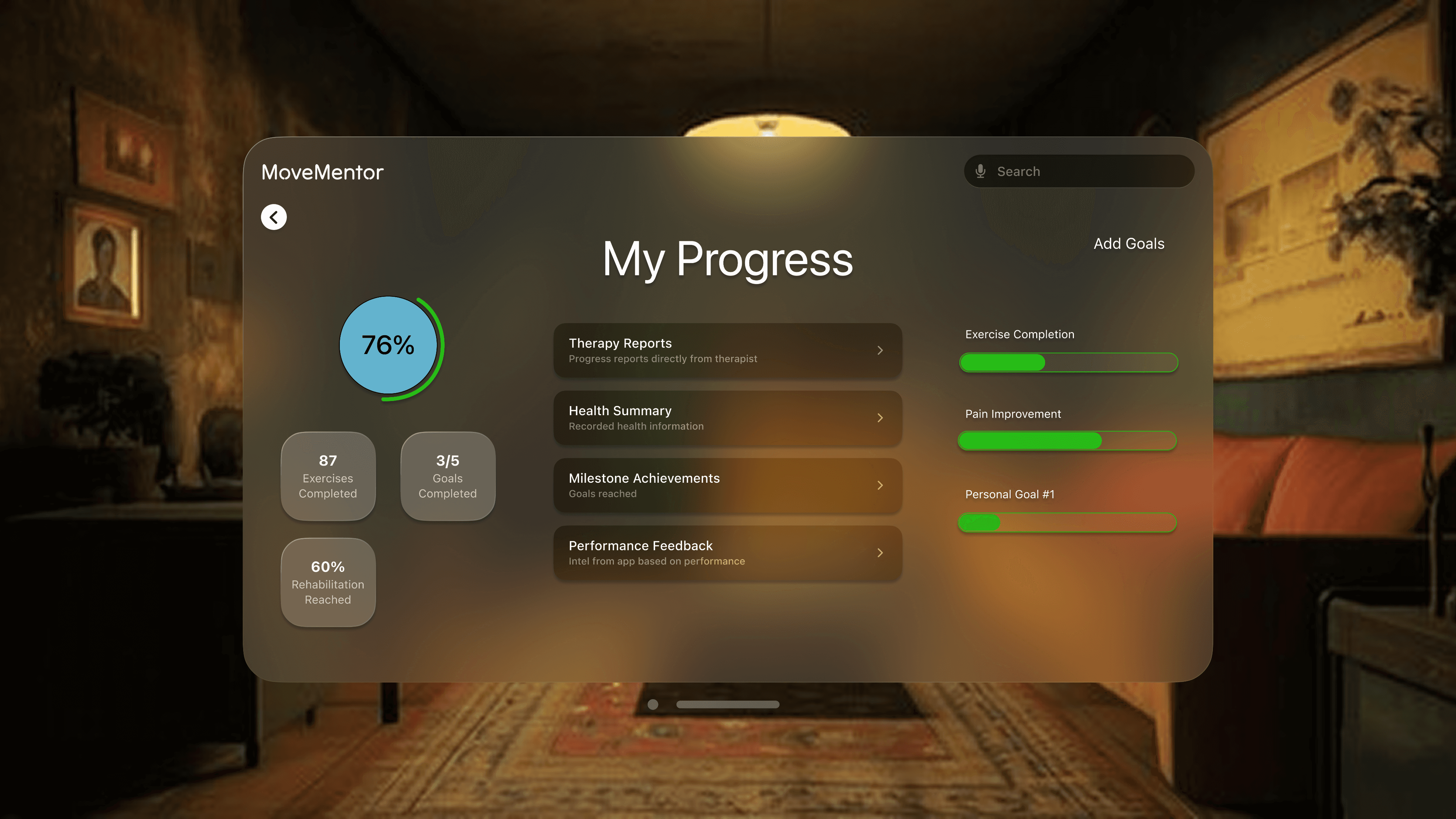
The progress feature helps users visualize their recovery journey and stay motivated by monitoring key milestones. With metrics such as exercise completion rates, personal goal tracking, and overall improvement, users can see how far they've come!
The Solution
Improving Rehabilitation Through AR
Move Mentor is an app that makes physical therapy more accessible and effective by providing personalized AR guidance, ensuring users perform exercises correctly and stay motivated during their recovery.
Recovering from an injury can be overwhelming, especially when patients struggle to remember or properly perform physical therapy exercises at home. Without clear guidance and motivation, recovery often slows, leading to frustration and reduced progress. My challenge was to design an engaging and supportive AR experience that makes rehabilitation more accessible, intuitive, and effective.
Provide patients with step-by-step exercise guidance
Ensure exercises are easy to follow, reducing confusion and risk of improper form
Motivate users by making recovery interactive and encouraging consistent progress
Support therapists by offering a tool that enhances, not replaces, their expertise
Research
Understanding The Challenge
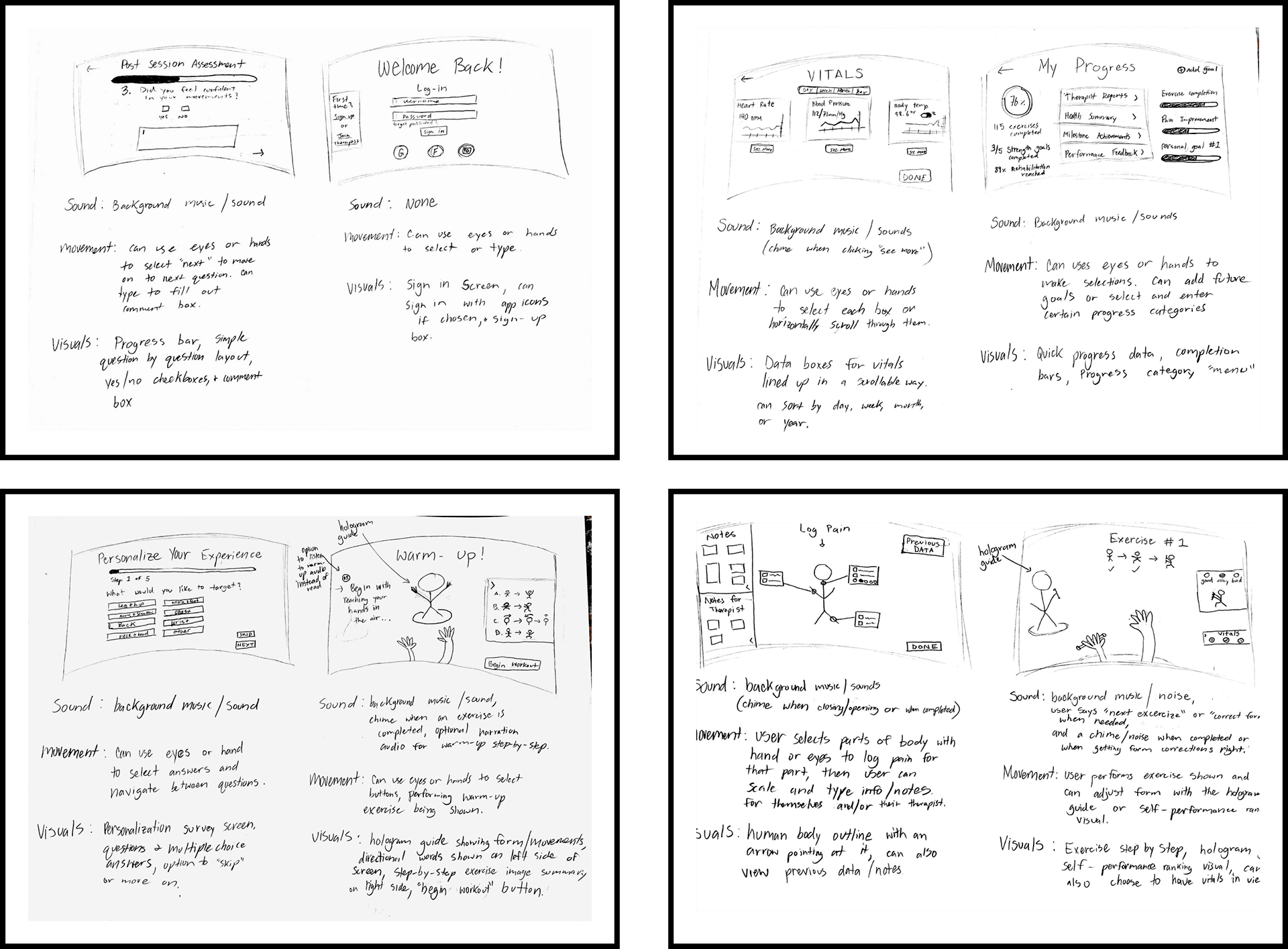
I explored my ideas through quick sketches, using visuals to map out possible solutions and experiment with layout, features, and the overall user experience. These early drawings helped transform abstract concepts into tangible directions for the design.
Design
Early Sketches
To design a tool that truly supports recovery, I needed to understand the people using it. By creating a persona, I captured the goals, frustrations, and motivations of a typical patient, helping us keep real user needs at the center of every design decision.
Patient Persona
To better understand user needs and challenges, I conducted interviews and organized the most common insights into key quotes. This helped highlight major pain points and opportunities that informed the design direction.
Users struggled most with recovery due to incorrect form, and some found it even harder to maintain proper form throughout their exercises.
Users found it difficult to stay motivated during recovery, and some felt discouraged when they couldn’t see immediate progress.
Gathering User Insights
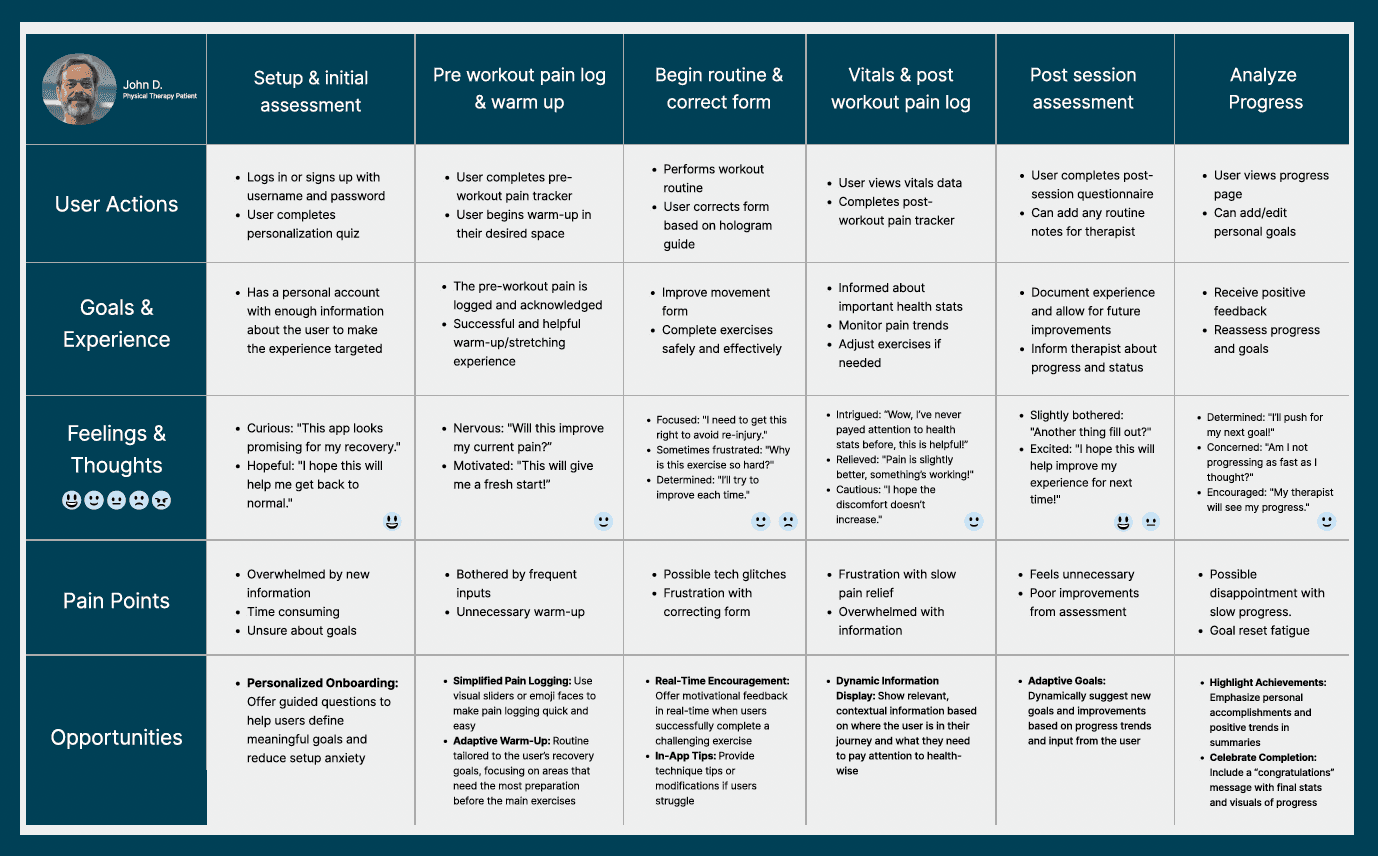
This journey map illustrates the user's emotional and physical highs and lows throughout the recovery process, highlighting key challenges and opportunities for improvement.
Mapping the User Experience
Project Impact
The final Move Mentor design simplified exercise guidance, reduced user confusion, and made at-home physical therapy more engaging and intuitive. Usability testing showed that participants could follow exercises accurately and complete tasks successfully, confirming that the design met key user goals. These results suggest that patients can recover more efficiently and confidently, while therapists benefit from a tool that supports and enhances their care.
Lessons Learned & Future Development
Broader User Testing: Including users with a wider range of physical therapy needs would have provided more diverse insights, helping us better understand how different user groups interact with the app
Streamlined Onboarding: A more guided and user-friendly onboarding process could improve how new users navigate the app, helping them understand features faster and gain confidence using the platform
Accessibility Enhancements: Ensuring the app accommodates users with visual or motor impairments is critical. This project highlighted the importance of integrating accessibility from the start to make the experience truly usable for all
Future Development: Given more time, we could expand testing, refine onboarding flows, and explore additional accessibility features. These improvements would further enhance usability, engagement, and inclusivity across a broader range of users.
Measuring Impact
Check Out My New Wearable Integration!
Ready to start your first session?
The Final Prototype
Key themes from my research helped guide the design direction:
Goals & Objectives
Health Insights
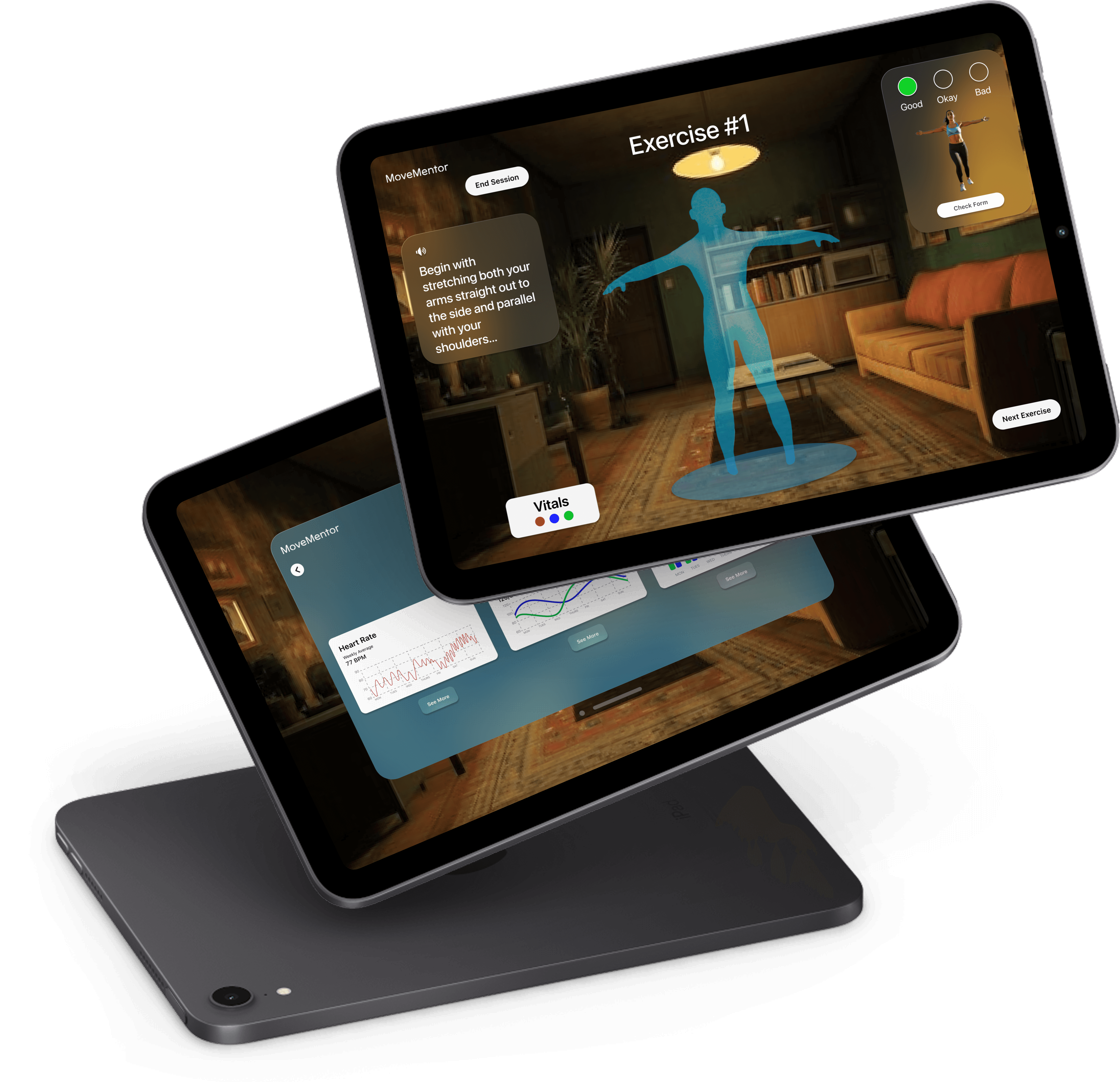
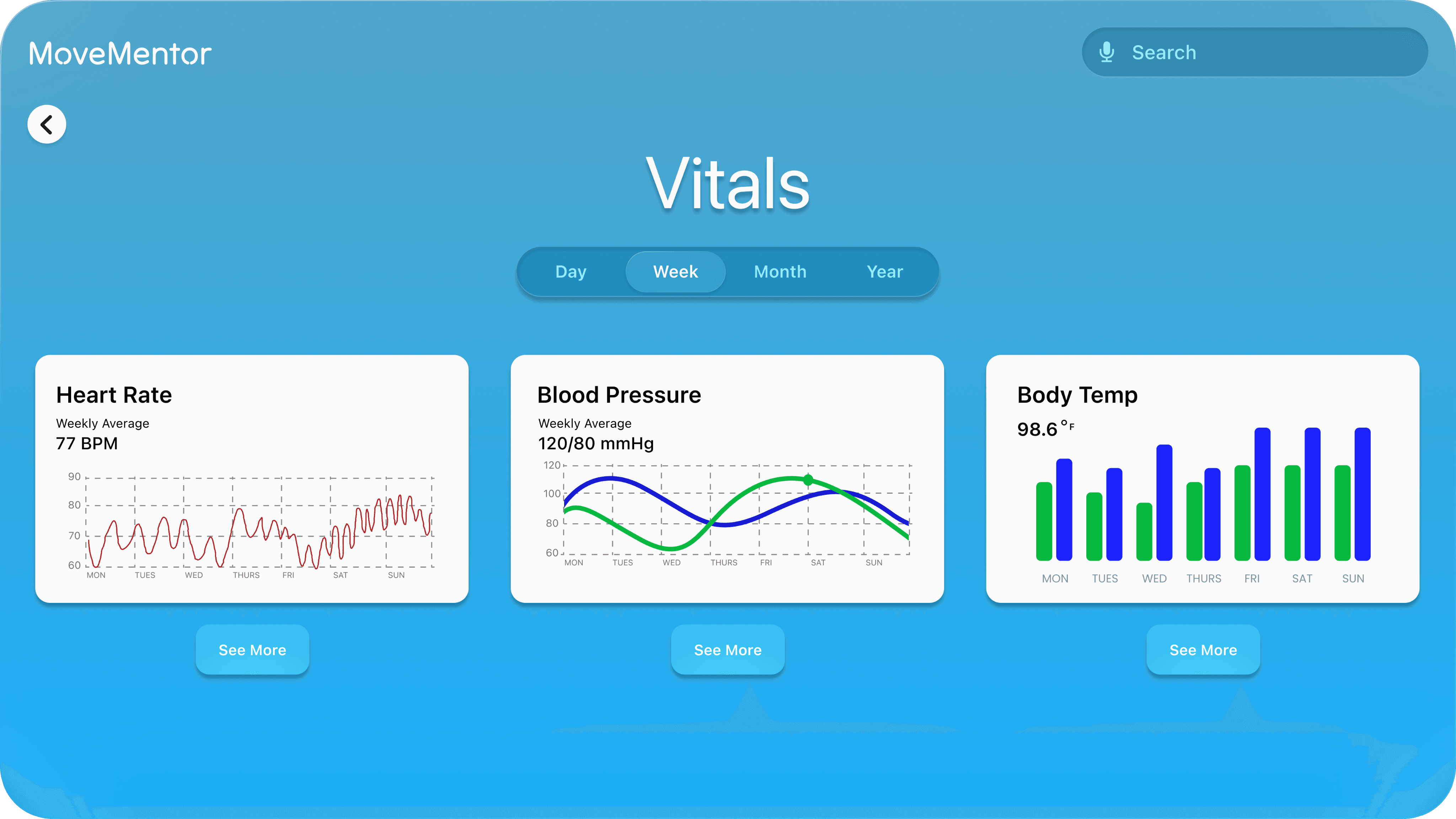
The Vitals Dashboard tracks essential data, like heart rate and blood pressure, so users can stay informed about their physical condition. This feature allows for a clearer understanding of how the body is responding to therapy.
Real-Time Feedback
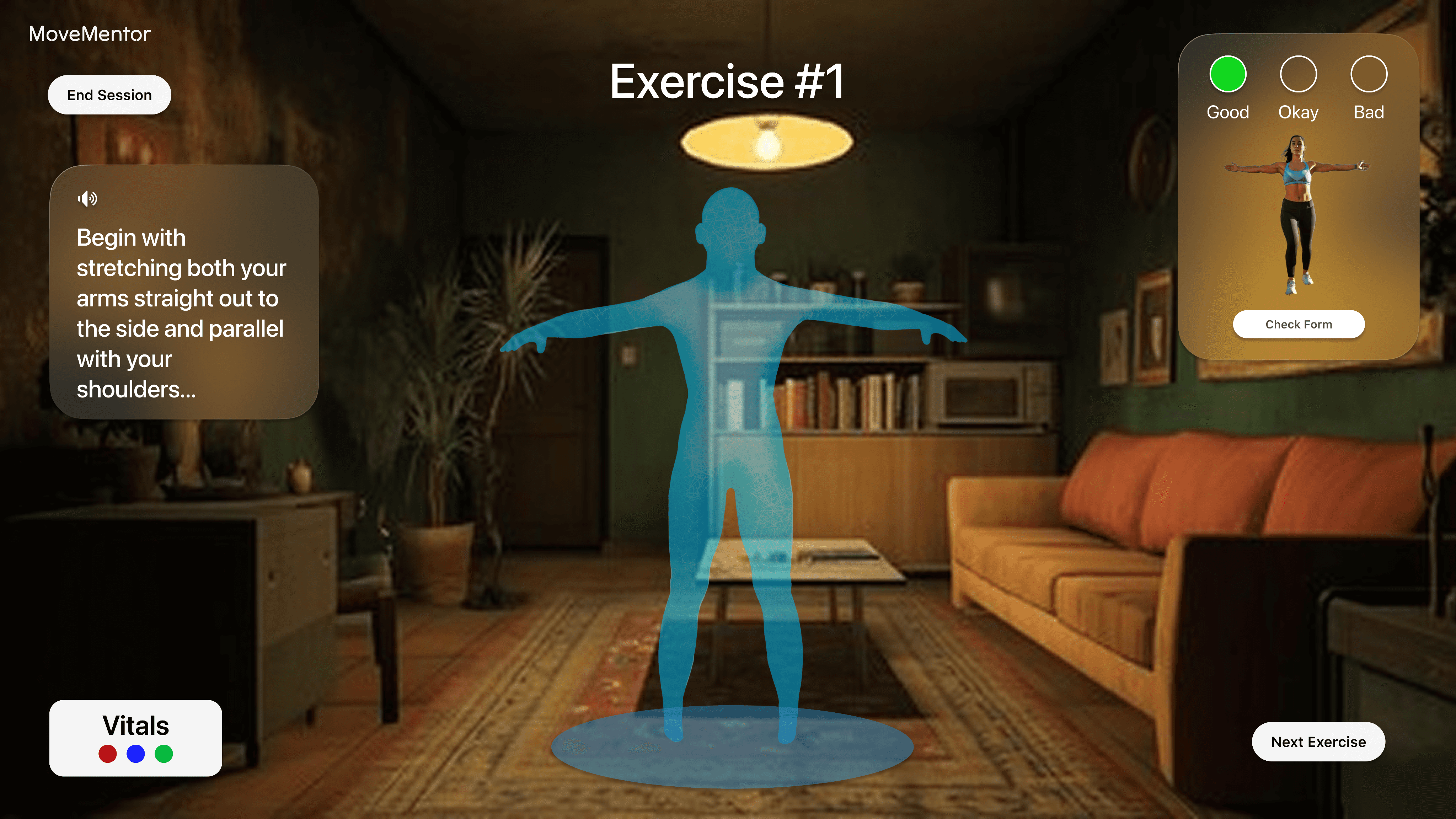
The routine screen guides users through each workout with a hologram trainer demonstrating proper form. Built in form correction provides instant feedback to help users exercise safely and correctly.
Move Mentor
Recover smarter,
Move stronger
Role - Researcher, Designer
Tools - Figma
Duration - 2 Months
“I always worry if I’m doing the exercises right at home. I feel like I might be making my injury worse instead of better.”
“It’s hard to stay motivated when progress feels slow.”

45 years old
Detroit, MI
Construction worker
Single dad of 2 kids
Goals
Pain Points
Motivations
Needs
Stay motivated and consistent
Better form
Feels and sees progress
Desire to return to work or active lifestyle
Avoiding setbacks or further injury
Lacks confidence in form
Needs motivation to stay consistent
Fears re-injury
Clear, step-by-step guidance
Feedback on form
Engaging interface to maintain motivation
Jason has spent 20+ years in construction, but a torn rotator cuff has kept him from work. While he attends weekly therapy, he struggles to stay consistent at home, often forgetting proper form and lacking motivation. He has some experience with fitness apps but hasn’t used physical therapy technology before.
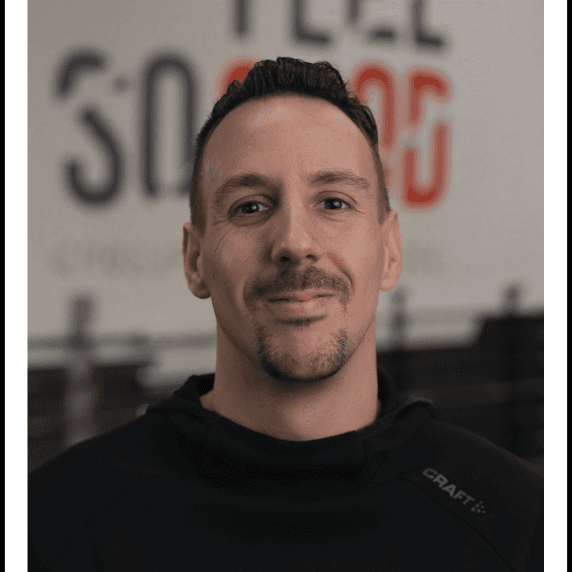
Jason Mendez
User Story